Halloween and Aging Parents: A Little Treat, Without the Tricks
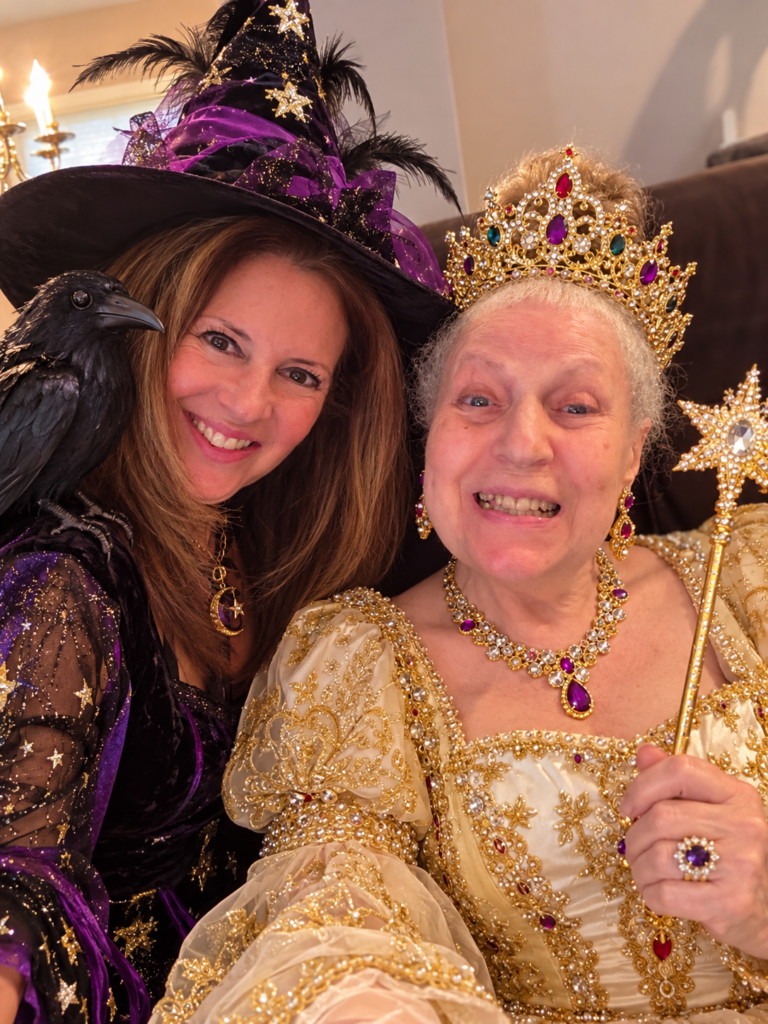
The costumes. The candy. The inflatable skeleton that looks suspiciously like Uncle Neil. Halloween is a time for laughter, family traditions, and watching children transform into everything from princesses to miniature vampires.
But for an older adult, especially someone living with dementia, Halloween has the potential to be more trick than treat.
Imagine your Mom, who has Alzheimer’s disease, sitting comfortably in your living room. Suddenly, the doorbell rings. A masked stranger appears at the door. A motion-activated witch starts shrieking from the corner, and a plastic skeleton begins dancing like it’s auditioning for Broadway. The family knows it’s Halloween. Your mother may not.
What looks like harmless fun to one person can feel confusing or frightening to another. Dementia can affect how someone interprets unfamiliar sights and sounds, recognizes faces, and responds to changes in their surroundings. That doesn’t mean that Halloween is off-limits. With a little planning, families can make the holiday enjoyable for older adults while avoiding Halloween hazards such as tripping over an electrical cord, which could land Mom in the Emergency Room.
SCENARIO #1: When the Witch at the Door Isn’t Funny or Cute
Your dad had always loved Halloween. He used to carve elaborate pumpkins, dress up as Dracula, and playfully scare the neighborhood kids (in the nicest possible way). Now he has dementia. The doorbell rings, and a child wearing a frightening mask stands on the doorstep. Your father looks alarmed and asks why a stranger is trying to get into the house. You explain that it’s Halloween. He seems to understand, but five minutes later, the doorbell rings again. This time, he’s frightened.
What’s happening?
Dementia can affect a person’s ability to recognize faces, interpret unfamiliar situations, and make sense of unexpected events. A mask that looks amusing to you may make it difficult for your father to recognize a familiar person. Repeated interruptions, loud noises, and unfamiliar visitors can also be overwhelming.
According to the Alzheimer’s Foundation of America, families should consider how Halloween decorations and activities can affect someone living with dementia.
We Suggest:
Skip the animated witches, screaming ghosts, flashing lights, and decorations that suddenly leap into action.
Keep things familiar. If your father enjoys seeing the grandchildren in costume, invite them over for a quieter visit before the neighborhood gets busy.
Do not try to persuade someone that the celebration is fun. If they’re frightened, they’re frightened. A calm response is far more helpful than explaining, for the fifteenth time, that the skeleton isn’t real. Better yet: remove the skeleton. The best Halloween is one that works for the people who are celebrating.
SCENARIO #2: The Obstacle Course
Your mother lives independently and enjoys decorating for Halloween. She has orange lights around the front door, a cheerful pumpkin on the stairs, and a collection of ghosts that make you wonder if there’s something she never shared with you about her past.
Unfortunately, the extension cord for the lights crosses the walkway, a decorative spider occupies the bottom step, and the hallway is darker than usual. Your mother doesn’t have dementia. She simply doesn’t see the cord in time.
Halloween decorations can introduce tripping hazards into otherwise familiar surroundings. For an older adult, a fall can have serious consequences. And no, the solution isn’t to ban all decorations and replace Halloween with a tasteful bowl of apples. It’s to decorate thoughtfully. Halloween could become much scarier if you wind up in Urgent Care.
We Suggest:
Inspect the entrance. Check stairs, walkways, thresholds, and handrails before visitors arrive.
Secure electrical cords. Keep them out of walking paths and away from places where someone might catch a foot or walking aid.
Light the way. Make sure hallways, entrances, and outdoor paths are adequately illuminated.
Free the Floor. That adorable pumpkin is considerably less adorable if someone trips over it.
Choose battery-operated candles. They eliminate the open flame and is a practical choice for illuminating pumpkins.
Footwear. If your parent is going to step outside, comfortable, well-fitting shoes with good traction are a better choice than slippers or shoes with unstable heels.
Mobility. If your parent uses a cane or walker, make sure the route to the door is clear and that decorations don’t interfere with its use.
A few minutes of preparation can make the evening safer for everyone.
Now that the home has been cleared for safety, let’s talk about stamina. She loves seeing the neighborhood children in costume and handing out candy, but she tires easily and worries about managing the door when visitors arrive in a steady stream. Should Mom let go of the tradition? Not necessarily. Aging doesn’t mean giving up the things that make life enjoyable. It may simply mean finding a more comfortable way to do them.
We Suggest:
Set up a comfortable station. Place a chair near the entrance so she can sit while greeting visitors, provided the area is clear and safe.
Keep treats within easy reach. A small bowl of candy is easier to manage than repeatedly bending down to retrieve a heavy container.
Make it a family event. Ask a relative or neighbor to join her for the evening.
SCENARIO #3: When Your Mother Doesn’t Recognize the Grandchildren
Your daughter arrives with her children dressed as a vampire and a zombie. They’re adorable. You’re reaching for your phone to take pictures before they outgrow the costumes.
Your mother, who has dementia, looks at them uncertainly. She asks who the children are. When they approach her wearing their masks, she pulls away.
Everyone is a little disappointed. The children don’t understand why Grandma isn’t happy to see them, and you’re trying to keep the visit from becoming uncomfortable.
First, take a breath. Changes in facial recognition, memory, and the interpretation of unfamiliar appearances can make costumes confusing for someone living with dementia.
We Suggest:
Try a costume-free introduction. Let the children greet Grandma in their regular clothes, then put on their costumes if she seems comfortable.
Make introductions simple. Rather than asking, “Don’t you recognize her?” try, “Look who’s here! Sylvie came to visit you with her costume.”
Give everyone a role. The children might help decorate cookies, sort Halloween treats, or look through family photographs with Grandma.
A short, pleasant visit is often preferable to a long one that leaves everyone exhausted. Follow Grandma’s lead. If she enjoys the costumes, wonderful. If she doesn’t, there’s no need to push it. The goal isn’t to recreate every Halloween exactly as it used to be. It’s to find new ways to enjoy the traditions that still bring pleasure.
For families caring for aging parents, holidays can bring a mixture of joy, nostalgia, and unexpected challenges. Sometimes the hardest part is recognizing that a tradition needs to change. The elaborate decorations may have to go. The late-night party may become an afternoon visit. The grandchildren may need to take off their masks before greeting Grandma.
These adjustments can feel like losses, particularly when they remind us that a parent is changing. But a tradition doesn’t have to look the same to remain meaningful.
A pumpkin decorated together, a favorite Halloween story, a bowl of candy shared with grandchildren, or an old photograph that sparks a happy memory can still make the holiday special. Be mindful of activities that may be difficult for them. And if that means retiring the screaming witch in favor of a quiet pumpkin, so be it. The witch can take up residence across town.
Wishing you and your family a safe, happy, and frightfully good Halloween!
Have a question? Reach out for Clarity Call. No question is too small. Prefer email? Send us one here.
Susan Chaityn Lebovits
Ease into Aging